Why Are Digital Banks in Carbon Trading Ditching Email for Custom Slack Bots?
7 min to read
Carbon markets are exploding, and digital banks are jumping right into the middle of it, trying to manage the buying and selling of carbon credits. It's a massive opportunity, for sure, but honestly, their internal processes are often a complete mess. We're talking serious operational headaches, trouble finding liquidity, and workflows that just don't connect, making it pretty much impossible to scale up.
Sure, everyone uses the big platforms. You've got your Bloomberg Terminal for data, Xpansiv for commodity market access (they own CBL, a major voluntary market), and AirCarbon Exchange (ACX). These are great for making the trade.
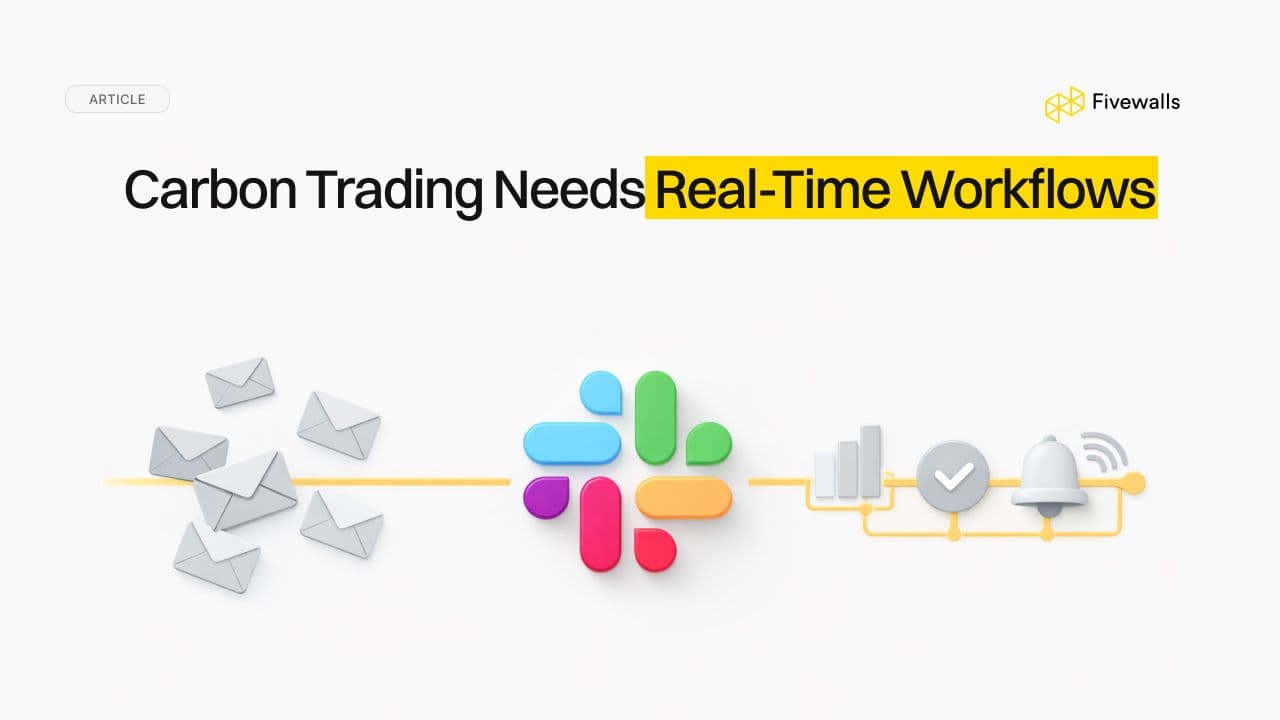
But what is the real problem? They're information silos. They don't talk to the bank's internal compliance software, the risk dashboards, or the tools the back-office uses. This means a trader sees an opportunity, but then has to jump into a dozen email threads or separate chats to get approval, creating a massive, costly lag.
This is exactly where custom Slack integrations come in. They're used for bridging that gap, automating compliance checks, and speeding up the whole trade-to-settlement lifecycle.
The Core Problems for Banks in Carbon Trading
Carbon trading isn't like trading stocks. It's a newer, incredibly complex market, and banks are struggling with some key problems. Workflows are all over the place, regulations are a nightmare, and decisions have to be made in seconds. Let's break down why custom Slack setups are starting to look like a massive competitive edge, not just a "nice-to-have."
1. Communication Silos & Workflow Lag
Think about just one trade. It needs eyes from a trader, a compliance officer (to check the credit's origin and registry ID from Verra or Gold Standard), a risk analyst, and maybe even the sustainability team. When they're all communicating in different email chains, it's a slow, manual nightmare. You get constant delays in trade approvals, bottlenecks in reporting, and just plain inefficient risk checks.
Banks are drowning in email. Even the best trading platforms (like Refinitiv Eikon or CME Group's carbon futures products) are built for execution, not for plugging into a bank's internal workflow. A lot of compliance tools still need someone to manually punch in data.
A custom Slack integration isn't just about messaging. It's about building bots that pipe critical trade data right into a dedicated channel. A bot can flag an update, @-mention the compliance team for approval with all the data attached, and link the trading desk and compliance folks instantly. No more "Did you see my email?" delays.
2. The Compliance and Regulation Headache
Carbon markets are heavily regulated. We're talking complex rules that change all the time, like the EU's Carbon Border Adjustment Mechanism (CBAM). Banks have to be incredibly transparent in their reporting. If they miss a deadline or mess up a report, the fines are huge, not to mention the reputation hit.
A built-in Slack reminder is fine for a meeting, but it's useless for this. A custom integration can hook directly into compliance databases and the carbon credit registries themselves. Imagine a bot that automatically tracks regulatory changes, flags a potential violation in real-time (e.g., "Warning: This credit bundle doesn't meet new EU criteria"), and can even help generate audit-ready reports on command. It moves compliance from a reactive "uh-oh" to a proactive "we got this."
3. Missing Out on Real-Time Market Moves
Carbon credit prices swing wildly. A trader needs to act now to get a good price or manage risk. Without instant updates, they're flying blind. They'll either miss a great trade or make a bad call that costs the bank real money.
You can connect a basic RSS feed to Slack, sure. But a custom bot can do so much more. It can provide real-time price alerts pulled via API from multiple exchanges, run quick trend analyses, and even execute pre-approved trades based on set triggers (e.g., "If $NGR credits drop below $X, buy Y amount"). This isn't just seeing data; it's acting on it instantly.
4. Juggling Data from a Dozen Platforms
This is a huge one. Banks are trying to manage data from totally separate systems. They have one platform for tracking a client's emissions, another for their own financial reporting (like an ERP), and then all the market pricing feeds. It's a fragmented mess that leads to delays and, worse, inaccuracies from someone manually copy-pasting data in spreadsheets.
Slack's basic file-sharing is okay for sending a report, but a custom integration can build a unified, automated dashboard inside Slack. It can pull emissions data from a client's system, grab financial performance metrics, and overlay real-time credit pricing. This slashes the manual reconciliation work and makes financial decisions based on emissions data way more accurate.
Tackling Fraud and Managing Risk (Where Custom Bots Shine)
Fraud is a massive concern in carbon markets. It's not always obvious. People might try to sell the same carbon credit twice (known as double counting), misrepresent a "green" project that isn't, or try to manipulate the market. Because these transactions are so complex, spotting fraud early is critical. Traditional fraud tools are often siloed, meaning someone has to manually spot a problem, which is often way too late.
A basic Slack alert is useless here. A custom integration, however, can use AI-driven anomaly detection. It can scan huge volumes of transaction data to spot weird patterns, like sudden spikes in trading from a new account or credits being issued from a high-risk project.
It can cross-reference a credit's serial number with its blockchain ledger (if it's tokenized) and the bank's internal trade log. If that credit is sold twice, a bot can instantly flag it, pause the settlement, and alert the compliance team with a full audit trail before the money moves. This proactive monitoring is a game-changer for preventing losses and protecting the bank's reputation.
Of course, creating such a sophisticated, AI-driven integration is a massive technical undertaking. It requires expertise in building secure, scalable, financial-grade backend systems that can handle real-time data and complex compliance rules. This is exactly the kind of high-stakes challenge that most banks can't, or shouldn't, divert their core IT teams to build from scratch.
This is where specialized teams like Fivewalls come in. We’re an IT outsourcing company that really digs into these niche, complex backend challenges. We have deep expertise in building secure, scalable, and resilient software that can handle the demands of FinTech and regulatory compliance. We’re the kind of partner a bank would tap to build the very custom bots and API-driven workflows we're discussing, ensuring the solution is robust and financial-grade.
The "But Is It Worth It?" Question
Look, building a custom Slack integration isn't a weekend project. It takes serious planning and development time. You'll either need a skilled in-house team or, more likely, an external partner. It's going to cost more upfront than just buying an off-the-shelf plugin, and you have to think about ongoing maintenance and operational costs.
Scalability is also key. The solution has to be flexible enough to grow with you and not break when a third-party API changes. Plus, you have to actually train your traders and compliance teams to use these new tools.
But here's the flip side. While the initial investment is real, the long-term savings from improved productivity and (most importantly) better risk management are massive. It fosters a culture where your teams can actually innovate instead of just putting out fires. By tackling these challenges head-on, digital banks aren't just buying a tool; they're building a real, sustainable advantage in the carbon market.
The Strategic Takeaway
In the carbon trading game, everything hinges on speed, compliance, and accurate data. Just having Slack isn't enough.
The future for digital banks in this space is all about smart automation. The real key is figuring out the right mix of using standard Slack features for the simple stuff, but investing in custom development for the high-stakes work that gives you a genuine competitive edge.
Would you like to rate this article?